
Learning Center
The Great Duct Debate: Residential vs Commercial Cleaning Explained
Discover residential vs commercial air duct cleaning differences in scale, contaminants, equipment & Ohio regulations. Boost IAQ, efficiency now!
By Bachar “Ben” El Halabi Published Updated
Why Residential vs Commercial Air Duct Cleaning Differences Matter for Ohio Property Owners
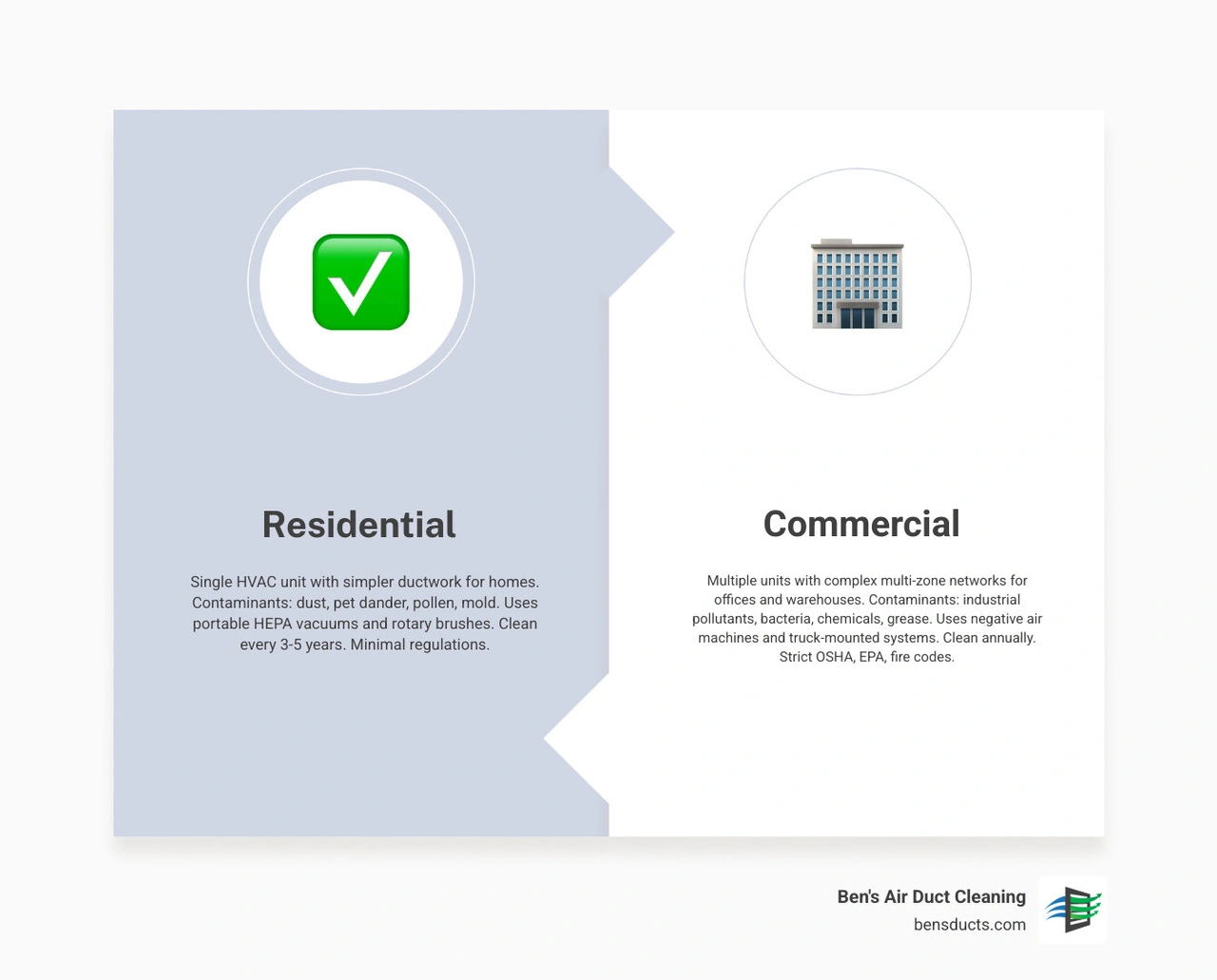
Residential vs commercial air duct cleaning differences come down to five key factors: system size, contaminant types, equipment used, cleaning frequency, and regulatory requirements.
| Factor | Residential | Commercial |
|---|---|---|
| System size | Single HVAC unit, simpler ductwork | Multiple units, complex multi-zone networks |
| Common contaminants | Dust, pet dander, pollen, mold spores | Industrial pollutants, bacteria, chemical residues, grease |
| Equipment | Portable HEPA vacuums, rotary brushes | Negative air machines, truck-mounted systems |
| Cleaning frequency | Every 3-5 years | Annually or semi-annually |
| Regulations | Minimal | OSHA, EPA, local fire codes, NADCA standards |
| Project timeframe | 2-4 hours | Full day to several weeks |
Whether you own a home in Westlake or manage a commercial building in Cleveland, the air moving through your ducts directly affects the health and comfort of everyone inside. But not all duct cleaning jobs are the same.
A single-family home in Berea has completely different needs than a multi-floor office complex in Strongsville. The scale is different. The contaminants are different. The equipment is different. And in commercial settings, the stakes — including regulatory compliance and employee health — are higher.
This guide breaks down exactly what sets these two types of duct cleaning apart, so you can make informed decisions about your property's indoor air quality.
Understanding Residential vs Commercial Air Duct Cleaning Differences in Scale
When we talk about scale, we aren't just talking about the length of the metal tubes hidden behind your walls. We’re talking about the entire engineering philosophy of the building. In a typical home in Avon or North Ridgeville, the HVAC system is a closed loop designed to keep a single family comfortable. It usually consists of one air handler, a furnace or AC unit, and a straightforward network of supply and return ducts.
Commercial systems are an entirely different beast. Imagine a 10-story office complex in downtown Cleveland or a massive warehouse in Elyria. These buildings utilize multi-zone units, cooling towers, chillers, boilers, and extensive "trunk lines" that can run for hundreds of feet.

System Complexity and Volume
In a residential setting, the ductwork is often made of flexible plastic or galvanized steel, and it's relatively easy to access. In a commercial setting, the sheer volume of air being moved requires heavy-duty materials like aluminum or thick steel.
Because commercial buildings are often divided into different zones (think of a hospital where the surgical suite needs different air pressure than the waiting room), the systems include complex components like economizers, energy recovery ventilators (ERVs), and make-up air units. Navigating these requires a level of expertise that goes far beyond standard residential training. For a deeper look at how these systems differ in specific areas like Westlake, check out our Commercial-Residential Air Duct Cleaning Guide Westlake OH.
Residential vs Commercial System Components
To help visualize the residential vs commercial air duct cleaning differences in scale, here is a breakdown of the components we typically encounter:
| Feature | Residential System | Commercial System |
|---|---|---|
| Air Handlers | Usually 1 | Often multiple large units |
| Duct Material | Flex duct, fiberglass, or steel | Heavy-gauge steel or aluminum |
| Zones | Single or dual zone | Multi-zone with VAV boxes |
| Access Points | Standard registers and grilles | Requires cutting and patching access holes |
| Filtration | Standard 1-inch to 4-inch filters | High-efficiency HEPA or bag filters |
Residential vs Commercial Air Duct Cleaning Differences in Contaminants
What exactly are we pulling out of your vents? The answer depends heavily on whether you are sleeping in the building or manufacturing products in it.
In homes across Parma and Lakewood, the primary culprits are "lifestyle contaminants." This includes household dust (mostly skin cells—yuck!), pet dander, pollen tracked in from the backyard, and occasionally mold spores if there’s a moisture issue in the basement. Understanding the Residential Air Duct Cleaning Importance is key for families, especially those with allergy sufferers or pets.
Commercial contaminants, however, are often a byproduct of the business itself. A restaurant in Rocky River will have ducts coated in grease-laden vapors, while a manufacturing facility in Lorain might deal with industrial pollutants and chemical residues.
Common Commercial Pollutants Include:
- Industrial Dust: Fine particulates from machinery or warehouse traffic.
- Chemical Residues: Vapors from cleaning agents, paints, or manufacturing processes.
- High-Volume Bacteria: Due to high occupancy, germs circulate much faster in office environments.
- Grease and Carbon: Especially prevalent in hospitality and food service sectors.
- Construction Debris: Often found in large commercial buildings that undergo frequent renovations or build-outs.
Residential vs Commercial Air Duct Cleaning Differences in Equipment
Because the scale and contaminants differ so much, the tools we bring to the job site must change accordingly. We don't just use a fancy shop-vac; we use specialized, industrial-grade machinery designed for total contaminant extraction.
For residential jobs, we often use portable HEPA-filtered vacuums, rotary brushes, and air whips. These tools are designed to be nimble enough to move through a house in Bay Village without scuffing the floors or making too much noise, yet powerful enough to pull every speck of dust from the vents.
In the commercial world, we step up to heavy-duty negative air machines. These massive units create a vacuum effect throughout the entire duct network, ensuring that once we agitate the dust, it has nowhere to go but into our containment system. In some cases, we even utilize truck-mounted systems that provide incredible suction power for long duct runs. You can learn more about these heavy-duty processes on our Commercial Air Duct Cleaning service page.
Regulatory Compliance and Safety Standards in Ohio
This is where the "Great Duct Debate" gets serious. For a homeowner in Fairview Park, duct cleaning is a choice made for comfort and health. For a business owner in Cleveland, it is often a matter of legal and regulatory compliance.
OSHA and EPA Guidelines
Commercial properties are subject to strict Indoor Air Quality (IAQ) standards. Agencies like OSHA (Occupational Safety and Health Administration) and the EPA have guidelines to ensure that employees are working in a safe environment. Failure to maintain clean ducts can lead to "Sick Building Syndrome" (SBS), where employees experience headaches, fatigue, and respiratory issues that vanish once they leave the building. This can lead to increased absenteeism and even legal liabilities for the employer.
Fire Hazards and Local Codes
In commercial settings, dirty ducts aren't just an air quality issue; they are a fire hazard. This is especially true in restaurants where grease buildup in exhaust vents can ignite. Local fire codes in cities like Strongsville and North Royalton often mandate regular inspections and cleanings for specific types of businesses.
Our team is well-versed in these requirements, ensuring that your business stays compliant and safe. For more information on how we help local companies stay up to code, see our guide on Commercial Duct Cleaning for Businesses.
Maintenance Frequency and Impact on Energy Efficiency
How often should you call us? The 2026 standard for residential homes is generally every 3 to 5 years. However, if you have three golden retrievers and a cat in your Medina home, you might want to see us a bit sooner!
Commercial buildings require a much more aggressive schedule. Because of the high foot traffic and constant HVAC usage, annual or semi-annual inspections are often the gold standard. A retail space in SouthPark Mall or an office in Independence runs its HVAC system almost 24/7, meaning the ducts act like a giant lung that never stops breathing in pollutants.
The Energy Efficiency Connection
Whether it's a home or a business, dirty ducts act like a clogged straw. Your HVAC system has to work significantly harder to push air through a layer of dust and debris. This leads to:
- Higher Utility Bills: Your system runs longer to reach the desired temperature.
- Increased Wear and Tear: Components like the blower motor and heat exchanger fail sooner when they are constantly strained.
- Uneven Temperatures: Dust buildup can restrict airflow to certain rooms, leaving your office or bedroom uncomfortably warm.
By maintaining a regular cleaning cycle, you aren't just improving air quality; you're protecting your wallet. Our Residential Air Duct Cleaning Guide provides more details on how to keep your home system running at peak performance.
Benefits of Regular Residential Cleaning:
- Allergen Reduction: Removes pollen, dust mites, and pet dander.
- Odor Elimination: Gets rid of musty smells trapped in the ductwork.
- System Longevity: Helps your expensive furnace and AC unit last longer.
- Healthier Sleep: Cleaner air leads to fewer respiratory disruptions at night.
Frequently Asked Questions about Duct Cleaning
How often should I clean my business ducts in Cleveland?
In high-traffic environments like Cleveland offices or retail stores, we recommend annual inspections. If you operate in an industrial setting or a facility with high moisture levels, semi-annual cleanings might be necessary to prevent mold growth and ensure compliance with health standards. For more localized advice, check out our Commercial Air Duct Cleaning Cleveland Tips.
Does duct cleaning improve energy efficiency?
Absolutely. Restricted airflow is one of the leading causes of high utility bills. When we remove the "blanket" of dust from your coils and ducts, your system can breathe again. This reduces system strain and can lead to noticeable savings on your monthly energy costs. This is a major part of the Importance of Commercial Air Duct Cleaning.
Can cleaning be done during business hours?
While we can work during business hours in some settings, we understand that operational continuity is vital. For many of our commercial clients in Amherst and Solon, we offer flexible, after-hours, or weekend scheduling. This ensures that your employees and customers aren't disrupted by the noise or equipment. You can find more details in our Commercial Air Duct Cleaning Amherst OH Guide.
Conclusion
Understanding the residential vs commercial air duct cleaning differences is the first step toward a healthier building. While the core goal—removing contaminants—is the same, the path to getting there requires different expertise, equipment, and scheduling.
At Ben's Air Duct Cleaning, we take pride in serving our Ohio community, from the quiet streets of Avon Lake to the bustling business districts of Cleveland and Akron. Our team is licensed, insured, and deeply committed to the NADCA standards of excellence. Whether we are cleaning a cozy bungalow in Brooklyn or a sprawling industrial complex in Lorain, we bring the same level of professional expertise to every job.
Don't let hidden dust and pollutants compromise your health or your bottom line. Whether you are a homeowner or a business manager, we are here to help you breathe easier. Explore our Commercial Air Duct Cleaning services today and discover the difference that a professional, thorough clean can make for your indoor air quality.
Free quotes · 4.9★ on Google
Breathe easier. Get your free quote today.
Call now or request a free quote online — the Ben's team serves Northeast Ohio with licensed, insured, background-checked technicians.
No-pressure pricing · Before & after photos every job · 36 Ohio cities