

Learning Center
A Comprehensive Guide to Allergy Symptoms from Dirty Ducts
Discover allergy symptoms that could be caused by dirty ducts and learn how professional cleaning restores fresher Ohio air.
By Bachar “Ben” El Halabi Published
Are Dirty Air Ducts Triggering Your Allergy Symptoms?
The most common allergy symptoms that could be caused by dirty ducts include:
- Sneezing and runny nose - triggered by dust, pollen, and pet dander recirculating through your home
- Nasal congestion and sinus pressure - from continuous allergen exposure indoors
- Itchy or watery eyes - a reaction to airborne mold spores and dust mite debris
- Persistent coughing and wheezing - caused by irritants circulating through your HVAC system
- Headaches and fatigue - linked to poor indoor air quality and immune system strain
- Worsening asthma - as ducts redistribute known asthma triggers throughout the home
You wake up congested. Your eyes itch for no clear reason. You sneeze every time the heat kicks on. If any of this sounds familiar, your air ducts may be the problem — not the season.
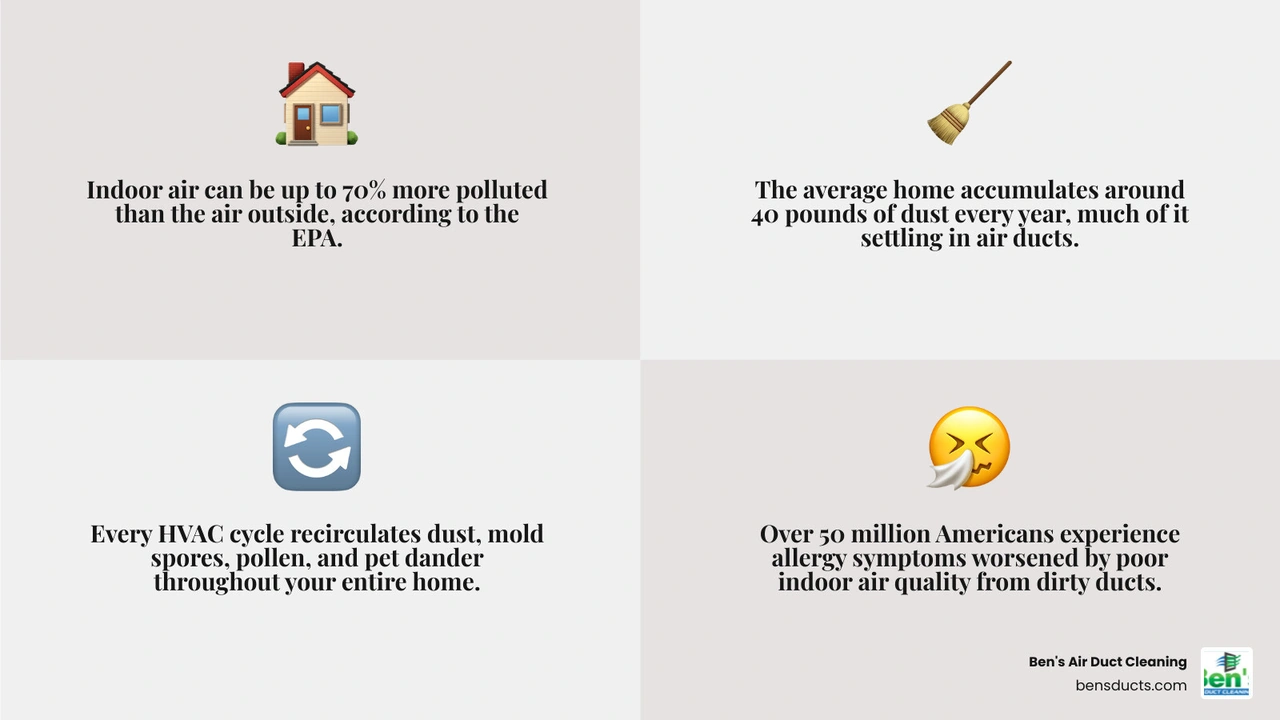
More than 50 million Americans deal with allergies every year, and indoor air is often a major part of the picture. According to the EPA, indoor air can be up to 70% more polluted than the air outside. The average home also accumulates around 40 pounds of dust every year — and a significant portion of that ends up inside your ductwork.
Every time your HVAC system runs, it pulls air through those ducts and pushes it back into every room in your home. If your ducts are holding onto dust, mold spores, pet dander, or pollen, your system is essentially spreading those allergens around the clock. In Ohio, where seasonal pollen swings, humid summers, and cold winters that keep windows shut for months are all part of life, this cycle can hit especially hard.
The good news is that understanding what's happening inside your ducts is the first step toward doing something about it.
Common allergy symptoms that could be caused by dirty ducts vocab:
- how to check if your air ducts need cleaning
- musty smell from air vents causes
- visible dust around air vents what it means
Understanding the Allergy Symptoms That Could Be Caused by Dirty Ducts
When we think of allergies, we often picture blooming trees in Westlake, freshly cut grass in Avon, or autumn leaves in Medina. However, many of our worst flare-ups happen right inside our living rooms. If you find yourself struggling with chronic discomfort that doesn't seem to improve with the changing seasons, it is highly likely that your home’s air distribution system is acting as a constant trigger.
Let's break down the specific allergy symptoms that could be caused by dirty ducts:
- Continuous Sneezing and Runny Nose: These classic histaminic reactions occur when your nasal passages detect foreign particles. When your furnace or air conditioner kicks on, a blast of microscopic dust, pollen, and insect debris can enter your breathing zone, causing immediate irritation.
- Sinus Congestion and Deep Pressure: Chronic exposure to airborne irritants causes the tissues inside your nasal passages to swell. This leads to that heavy, stuffed-up feeling in your forehead and cheeks, which often transitions into painful sinus infections if left unaddressed.
- Itchy, Watery, and Red Eyes: Your eyes are incredibly sensitive to airborne particles. When mold spores or dust mite waste are circulated by your HVAC system, they settle directly on the surface of your eyes, triggering redness, itching, and excessive tearing.
- Persistent Coughing, Wheezing, and Sore Throat: As you breathe in recirculated particles, they travel down into your throat and bronchial tubes. This can cause a tickle in your throat, a dry cough, or a whistling sound (wheezing) when you breathe, particularly at night.
- Headaches and Cognitive "Brain Fog": Breathing in high concentrations of fine particulate matter and volatile organic compounds trapped in duct debris can reduce oxygen absorption and trigger inflammatory responses, leading to chronic tension headaches and daytime lethargy.
- Worsening Asthma Attacks: For our neighbors in Cleveland and surrounding suburbs who live with asthma, dirty ducts are a serious health hazard. The constant re-introduction of triggers can increase the frequency and severity of asthma attacks.

To learn more about how these microscopic particles interact with your body over time, check out our detailed guide on How Dirty Air Ducts Affect Your Health.
How Your HVAC System Acts as an Allergen Reservoir
To understand why your ductwork has such a massive impact on your health, it helps to view your heating and cooling system as a respiratory system. Your HVAC unit "breathes in" air from your rooms through the return vents, conditions it (heats or cools it), and "breathes it out" through the supply vents.
If the interior walls of your ductwork are coated in debris, every cubic foot of air that passes through is contaminated. Over 90% of homes have a substantial accumulation of dust and debris hiding inside their air ducts. This buildup turns your ventilation system into an active reservoir for a variety of nasty pollutants.
| Contaminant Type | Indoor Concentration vs. Outdoor | Primary Source in Ducts |
|---|---|---|
| Dust Mites & Debris | Up to 5x higher indoors | Shed human skin flakes settling in duct dust |
| Mold Spores | Can multiply rapidly in dark, damp ducts | AC condensate leaks and high Ohio humidity |
| Pollen Grains | Settles and accumulates over years | Brought in via open windows and shoes, trapped in dust |
| Pest Droppings | Exclusively indoor hazard | Mice, insects, or spiders nesting in unsealed ducts |
| Bacteria & Viruses | Recirculated continuously | Airborne droplets trapped in dust layers |
This reservoir effect is supercharged by the recirculation multiplier effect. In a typical home, the air is recirculated through the duct system 5 to 7 times every single day. If your ducts are dirty, those allergens aren't just sitting there; they are being redistributed throughout your home over and over again. This constant loop is why indoor air is so frequently worse than the air outside.
By understanding the Indoor Allergy Triggers Hiding in Your Air Ducts, you can begin to see why standard surface cleaning like dusting and vacuuming your carpets only provides temporary relief. If the reservoir itself isn't cleaned, the dust will return almost as soon as you put your vacuum away.
Recognizing Pet-Related Allergy Symptoms That Could Be Caused by Dirty Ducts
We love our pets in Northeast Ohio. Whether you have a golden retriever running around your yard in Strongsville or a fluffy cat lounging in your Lakewood apartment, pets bring immense joy to our lives. Unfortunately, they also bring a mountain of hair and dander.
Pet dander consists of microscopic flecks of skin shed by cats, dogs, rodents, and birds. Because these particles are incredibly light and sticky, they easily bypass basic fiberglass air filters and settle deep inside your supply and return ducts. High-shedding breeds can quickly coat the interior of your system in a thick layer of fur and dander.
When your HVAC system runs, this trapped dander is blown back into your living spaces, settling on your furniture, bedding, and carpet. If you find yourself sneezing more when you sit near a vent, or if your pet-allergy symptoms persist even when your pet is in another room (or after they’ve spent the weekend at the groomer), your ducts are likely holding onto a massive supply of dander.
For helpful strategies on keeping your home fresh with furry friends, take a look at our Pet Owners Guide to Cleaner Indoor Air and explore the Best Ways to Manage Pet Allergens Indoors.
Identifying Seasonal Allergy Symptoms That Could Be Caused by Dirty Ducts
Ohio’s climate is beautiful, but it can be absolutely brutal on seasonal allergy sufferers. Our weather creates a perfect storm of allergens that find their way directly into our duct systems:
- Spring Pollen: Tree and grass pollens are pulled into your home through open windows and doors. Once inside, they settle into your return vents, creating an indoor pollen reservoir that can trigger symptoms months after the outdoor pollen count has dropped.
- Summer Humidity: Our summers near Lake Erie can get incredibly humid. When relative indoor humidity rises, moisture can accumulate inside your ductwork, especially near the air conditioning evaporator coils. This dark, damp environment is a prime breeding ground for mold, with 20-30% of homes having mold present in their HVAC ducts.
- Winter Recirculation: During our freezing winter months in places like Parma and Lakewood, we seal our homes up tight to keep the heat in. This means no fresh air exchange. Any dust, dander, or mold trapped in your ducts is recirculated continuously, leading to a major spike in winter allergy flare-ups.
If your seasonal symptoms don't stop when you step inside—or if they actually seem to get worse when you're sitting cozy in your living room—your Ductwork is Making Your Allergies Worse.
Signs Your Home's Ductwork is Worsening Your Health
Because your ductwork is hidden behind walls and ceilings, it can be hard to know when it has reached a critical level of contamination. However, your home will usually drop some pretty clear clues that it's time for a professional intervention.
Here are the most common warning signs that your ducts are negatively affecting your health:
- Visible Dust and Dark Streaks on Vents: If you notice a dark, fuzzy buildup on your metal vent grates or dark streaks on the ceiling or drywall surrounding your registers, your ducts are filled with heavy debris.
- The "Immediate Dust" Phenomenon: Do you wipe down your coffee table in North Olmsted or your shelves in Broadview Heights, only to find a fresh layer of fine gray dust settling on them just a few hours later? When ducts are dirty, they constantly deposit new dust onto your clean surfaces.
- Musty, Earthy, or Stale Odors: If a damp, musty smell wafts through the room every time your air conditioner or furnace starts up, there is a high probability of mold or mildew growth inside the system.
- Uneven Airflow and Hot/Cold Spots: Thick accumulations of dust can restrict airflow through your branch lines, causing some rooms to feel stuffy and warm while others remain cold.
- Rapidly Clogging Filters: If you install a brand-new air filter and find it completely coated in thick, gray dust after only two or three weeks, your system is fighting a losing battle against the debris trapped deep inside the duct lines.
Paying attention to these physical warning signs is crucial. For a comprehensive checklist of what to look for, read our guide on the Signs Your Air Ducts Need Cleaning and learn how to identify Air Ducts Mold Growth Hidden Signs before they lead to serious health issues.
The Role of Professional Air Duct Cleaning in Allergy Prevention
Many homeowners wonder if they can tackle duct cleaning as a weekend DIY project with a household vacuum and a long brush. Unfortunately, standard residential vacuums do not have the power or the filtration capacity to clean a duct system safely. In fact, attempting to clean your ducts yourself often stirs up settled allergens and pushes them into your living spaces, temporarily making your allergy symptoms much worse.
To safely and effectively remove these micro-particles, professional intervention is required. At Ben's Air Duct Cleaning, we utilize a highly specialized, multi-step process designed to completely clear your system without letting a single speck of dust escape into your home:
- Negative Air Pressure Containment: We hook up a truck-mounted vacuum system to your main trunk lines. This creates a powerful negative pressure (suction) throughout your entire duct system. Any dust that is dislodged is pulled directly out of your home and into our specialized collection equipment.
- Mechanical Agitation: We run specialized whip lines, rotary brushes, and air snakes through every individual branch line. These tools gently but thoroughly scrub the interior walls of your ducts, breaking loose stubborn dust, pet hair, and mold spores that have adhered to the surfaces.
- HEPA-Filtered Extraction: Our advanced equipment utilizes High-Efficiency Particulate Air (HEPA) filtration, ensuring that up to 99.97% of microscopic particles are captured and safely contained.
By removing the physical reservoir of irritants, professional cleaning dramatically reduces the total allergen load in your home. This gives your immune system a much-needed break.
To understand how professional maintenance fits into your family's health plan, check out our articles on Air Duct Cleaning in Allergy Prevention, Air Duct Cleaning for Allergy and Asthma Sufferers, and learn how we Eliminate Allergens Trapped in Air Ducts.
Frequently Asked Questions About Air Ducts and Allergies
How often should air ducts be cleaned to prevent allergy flare-ups?
For standard homes in our Ohio service area, the National Air Duct Cleaners Association (NADCA) recommends professional air duct cleaning every 3 to 5 years.
However, if you or your family members struggle with moderate-to-severe allergies, asthma, or other respiratory conditions, we highly recommend scheduling a cleaning every 2 to 3 years. You should also consider more frequent cleanings if you have multiple pets, have recently completed a major home renovation project (which generates massive amounts of drywall and wood dust), or have recently moved into a previously owned home with an unknown maintenance history.
Can dirty air ducts cause headaches and fatigue?
Yes, absolutely. While we easily connect dirty ducts to sneezing and coughing, their impact on your energy levels and head comfort is often overlooked.
When your ducts are filled with dust, mold, and pest debris, they can harbor volatile organic compounds (VOCs), carbon particulates, and biological bacteria. Breathing in these microscopic pollutants forces your immune system to work overtime to fight off the constant influx of foreign particles. This continuous low-grade immune response can leave you feeling chronically fatigued, foggy-brained, and prone to tension headaches that seem to magically disappear when you leave the house for the day.
Will upgrading my HVAC filter help reduce indoor allergens?
Upgrading your air filter is an excellent way to maintain your indoor air quality, but it must be done correctly. Standard fiberglass filters (the cheap, thin ones) are only designed to protect your HVAC equipment from large dust bunnies; they do almost nothing to stop microscopic allergens.
Upgrading to a pleated filter with a MERV 11 or MERV 13 rating will capture a significantly higher percentage of fine particles, including pet dander, mold spores, and pollen. However, before you buy the thickest filter available, ensure your system's fan motor is rated to handle the increased resistance to airflow. It's also important to remember that a high-efficiency filter can only trap airborne particles; it cannot clean the dust and mold that has already settled inside your ductwork over the years.
Conclusion
Your home should be a safe haven, a place where you can breathe easy and relax. If your family is dealing with persistent allergy symptoms that could be caused by dirty ducts, you don't have to just live with the discomfort.
At Ben's Air Duct Cleaning, we are proud to help our neighbors across Northeast Ohio—from Avon Lake and Westlake to Berea, Parma, and Cleveland—reclaim their indoor air quality. Our licensed, insured, and expert team uses advanced NADCA-standard equipment to thoroughly clear out allergen reservoirs, helping your HVAC system run more efficiently and protecting your family's health.
Are you ready to clear the air in your home? Explore our comprehensive Indoor Air Quality Services and schedule your professional duct inspection today. Let's make home a place where you can finally take a deep, clean breath.
Free quotes · 4.9★ on Google
Breathe easier. Get your free quote today.
Call now or request a free quote online — the Ben's team serves Northeast Ohio with licensed, insured, background-checked technicians.
No-pressure pricing · Before & after photos every job · 36 Ohio cities